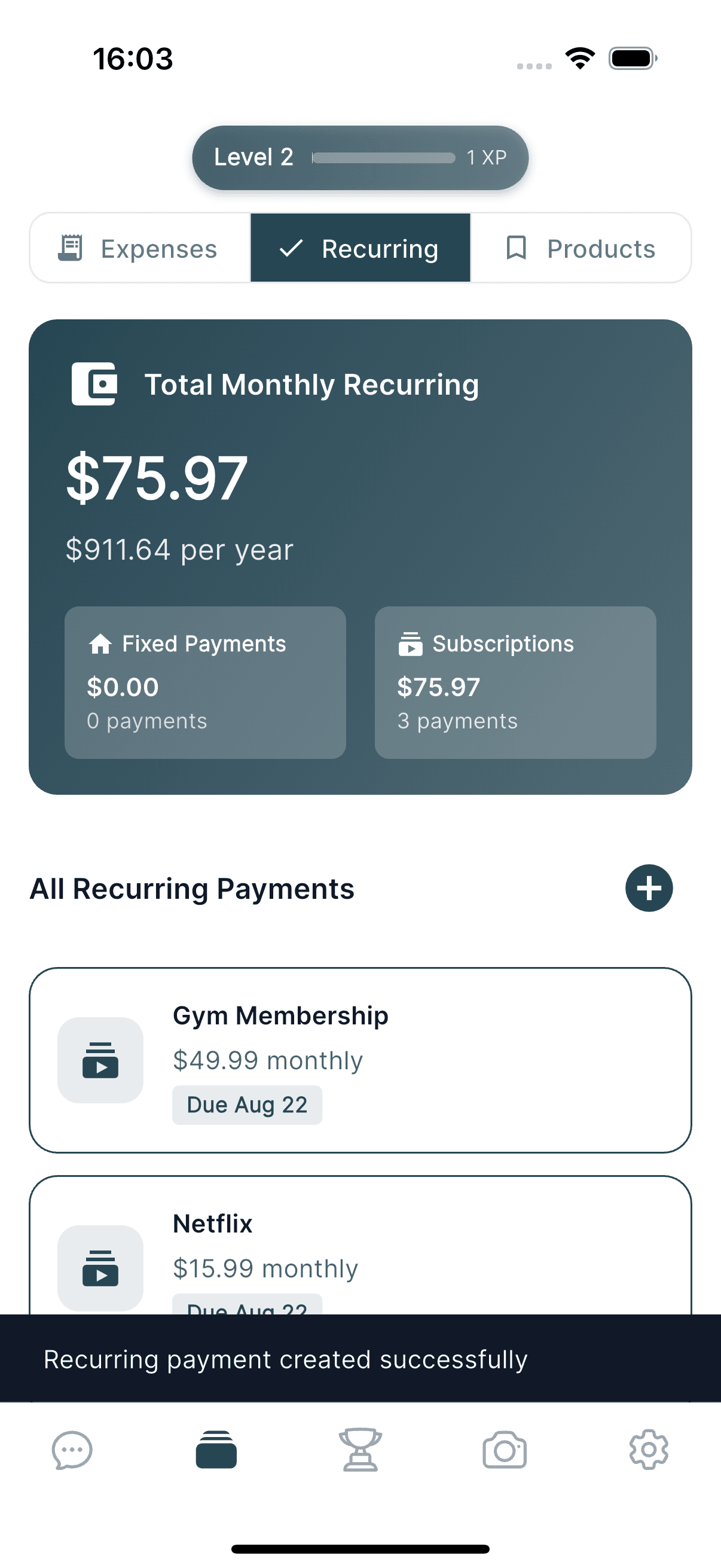
Forgotten subscriptions are one of the most commonly cited examples of "invisible" spending — a free trial that converted to paid months ago, a streaming service nobody in the household watches anymore, a software subscription from a job you no longer have. AI-powered subscription tracking apps like Rocket Money, Bobby, and Trim built entire businesses around solving this specific problem. The question worth examining is how well they actually work, and what their business model means for the recommendations they surface.
How Subscription Detection Actually Works
These tools connect to your bank and credit card accounts, then use machine learning models trained to recognize recurring charge patterns — same merchant, similar amount, regular interval — even when the charge description is vague or the billing date shifts slightly month to month. This pattern recognition is more sophisticated than it sounds: distinguishing a legitimate monthly subscription from a coincidentally similar one-time purchase requires analyzing transaction history over several months, not just looking at a single charge.
The AI also handles edge cases that simple rule-based systems struggle with — subscriptions billed annually instead of monthly, services that changed their billing descriptor name, or free trials that are about to convert to paid and haven't charged yet.
The Business Model Behind "Free" Tracking
Most subscription trackers offer free transaction scanning but charge for the cancellation service itself — either a flat fee per cancellation, a percentage of savings, or a "pay what you think it's worth" model with a recommended amount. Rocket Money, for example, takes a percentage of identified savings as its fee structure.
This creates an interesting incentive alignment: the company only profits if it successfully identifies subscriptions you actually want canceled, which is more aligned with user interest than, say, an ad-supported model would be. That said, it's worth understanding the exact fee structure before authorizing automatic cancellations, since percentage-based fees can add up if the tool flags numerous services.
What Independent Data Shows About Typical Savings
Self-reported savings figures from these companies tend to be impressive — often citing average annual savings in the hundreds of dollars per user. These figures should be read with some skepticism, since they're typically marketing statistics rather than independently audited data, and they likely reflect users who had unusually high amounts of forgotten subscriptions rather than a representative average.
More conservative estimates from financial counselors and independent reviews suggest the realistic range for most users falls lower — often closer to one or two genuinely forgotten subscriptions worth $10-30 monthly combined, rather than the larger figures sometimes advertised. The actual savings depend heavily on individual circumstances; someone who has never reviewed their subscriptions in years will likely find more than someone who already audits their accounts regularly.
The Detection Accuracy Question
False positives are a real, if usually minor, issue. AI categorization sometimes flags legitimate recurring bills — utilities, loan payments, or rent — as "subscriptions" worth reviewing, simply because they share the pattern characteristics of recurring charges. Most platforms have improved at distinguishing these categories over time, but it's worth reviewing flagged items rather than assuming every detected "subscription" is genuinely discretionary spending worth canceling.
There's also a coverage limitation: these tools can only detect what flows through connected accounts. Subscriptions billed to a card you didn't connect, or services with irregular billing cycles, can be missed entirely.
The Bottom Line
AI subscription tracking solves a genuine, common problem — most people do lose track of recurring charges over time, and pattern-recognition AI is well-suited to surfacing them systematically. The fee-aligned business model of most platforms creates reasonable incentive structure, though it's worth understanding the specific fee before authorizing cancellations.
The realistic expectation matters more than the marketing figures: for most people, these tools will surface a small number of genuinely forgotten subscriptions rather than dramatic hidden savings. That's still useful — finding even one or two forgotten charges can be worth the effort — but it's a more modest, realistic outcome than some advertising suggests.